Fir Branch Border Review
First Impressions: A Thoughtful, Festive Frame
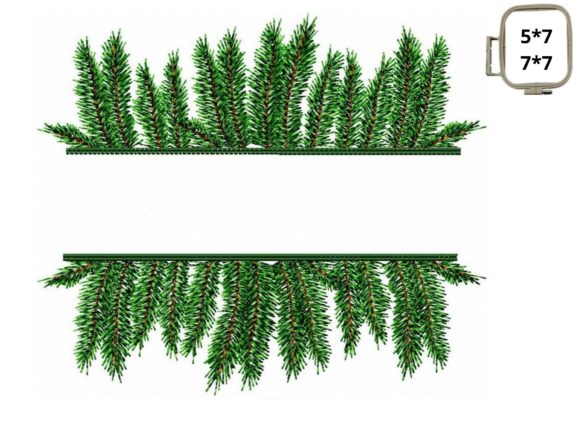
As an embroidery designer who’s stitched hundreds of holiday borders for Etsy shops, boutique clients, and custom apparel orders, I approached the Fir Branch Border with quiet curiosity—not hype. It’s not flashy or oversized, but it carries a grounded, organic charm: layered fir sprigs with subtle needlepoint texture, gentle curves, and intentional negative space. This isn’t a dense, high-stitch-count applique design—it leans into satin stitch definition and delicate running stitch accents that suggest pine needles without overloading detail. Visually, it reads as *hand-placed*, not digitally stacked—a rare quality in machine embroidery borders.
Where Fir Branch Border Fits Naturally
The product description mentions kitchen towels, tote bags, and holiday lunch mats—and that’s spot-on. But in real project use, Fir Branch Border shines where subtlety meets seasonal warmth: baby blanket hems, linen apron cuffs, pillow cover edges, and even minimalist sweatshirt hems (not center chest, but along the sleeve cuff or waistband). Its rhythm is calm, not commanding—ideal for handmade products where craftsmanship should whisper, not shout. It also works beautifully as a framing element for monogrammed initials on nursery decor or personalized gifts, especially when paired with soft thread colors like sage, charcoal, or cream on natural fabrics.
Real-World Embroidery Performance
I tested Fir Branch Border across three key scenarios: a medium-weight cotton tote bag, a brushed cotton baby blanket, and a structured twill cap. On the tote, it stitched cleanly with light tear-away stabilizer—no puckering, no skipped stitches. The satin stitch branches held crisp definition, and the fill stitch areas were breathable enough to avoid stiffness. On the baby blanket, I used a lightweight cut-away stabilizer underneath and a topping of water-soluble film; the fine details (especially the tiny branch tips) emerged clearly after rinsing. On the cap, I hooped the front panel with cap stabilizer and reduced speed—no distortion, though I recommend using the smallest hoop size listed (if provided) to minimize stretching.
For stretchy fabric like jersey sweatshirts? Proceed with care: test first, use fusible knit stabilizer, and avoid placing the border near high-movement seams. On dark fabric, contrast matters—the design relies on clean stitch definition, so avoid low-contrast thread pairings (e.g., dark green on black). For curved surfaces like caps or mugs (via embroidered sleeves), the border’s gentle arc adapts well—no warping or misalignment observed.
Practical Considerations for Commercial Use
If you’re selling finished items—whether on Etsy, at craft fairs, or through local boutiques—Fir Branch Border supports brand consistency without demanding heavy customization. Its balanced scale makes it easy to match with other Creative Fabrica embroidery designs in your library, especially other Borders or seasonal motifs. Because it avoids overly dense fill areas, it holds up well to frequent washing—critical for kitchen towels and baby items. Stitch density feels moderate: not so light that it fades after laundering, not so heavy that it compromises drape or comfort.
That said, always check the actual embroidery file before production. Confirm hoop size requirements, verify included formats (PES, DST, JEF, etc.), and review licensing terms on the Creative Fabrica product page—especially if you plan to sell physical items featuring this design. Creative Fabrica’s commercial license generally permits finished product sales, but double-check for any usage limits tied to this specific embroidery file.
Impact on Product Value & Customer Perception
This border elevates perceived value quietly. A plain kitchen towel becomes a cohesive holiday hostess gift. A generic tote transforms into a curated, thoughtful item—especially when paired with a matching printable mockup for your Etsy listing. Customers notice clean edges, consistent spacing, and intentional detail: the slight variation in branch length, the soft taper of each needle cluster. That level of nuance builds trust. It signals that you didn’t just slap on a clipart-style motif—you selected a design with purpose.
For photographers and social sellers, Fir Branch Border photographs exceptionally well. Its organic flow creates natural leading lines in flat lays, and the texture catches light without glare. It also translates smoothly to digital mockups—no pixelation, no awkward scaling issues—making it efficient for updating listings seasonally.
Key Embroidery Notes Before You Stitch
- Always test on scrap fabric—especially with textured or dark materials.
- Review thread color contrast carefully: light greens or muted teals often read better than bright emerald on natural linens.
- Check stitch density visually in your embroidery software—if fill areas appear overly compact, consider reducing density by 5–10% for softer drape.
- Confirm hoop size compatibility with your machine and intended project surface (e.g., cap frames vs. flat hoops).
- Compare light and dark fabric mockups side-by-side to assess visibility of fine details.
- Use appropriate stabilizer: tear-away for stable wovens, cut-away for knits or heirloom items, cap-specific for headwear.
- Inspect small details post-stitching—especially branch tips and inner curves—before trimming threads.
- Verify file details and licensing on the Creative Fabrica product page before launching commercial embroidery products.
A Border That Supports Your Craft—Not Overshadows It
Fir Branch Border doesn’t try to be the hero of your project. It’s the quiet collaborator—the steady frame that lets your fabric, your thread choice, and your customer’s story take center stage. For embroidery designers building a reliable library of seasonal design assets, it fills a specific, valuable niche: refined, wash-friendly, and commercially viable without sacrificing artistry. Whether you’re stitching one-off personalized gifts or producing small-batch holiday collections, this border earns its place—not because it’s loud or trendy, but because it stitches true, wears well, and feels authentically handmade.