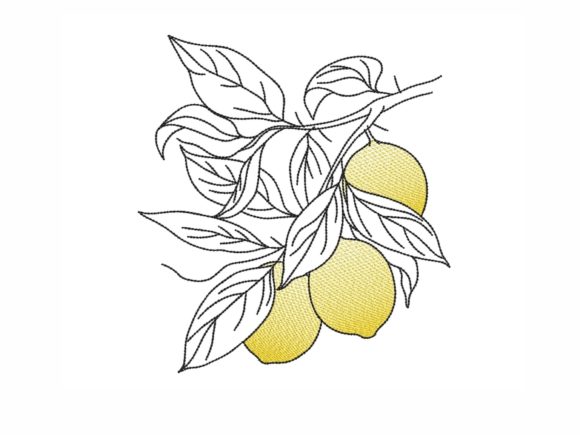
Lemons: A Bright, Versatile Embroidery Design for Craft Fairs
As an embroidery designer who’s prepped over 200 craft fair booths—from bustling urban markets to cozy farmhouse fairs—I’ve learned that not every digital embroidery file earns its spot on the table. Lemons does. At first glance, it reads as fresh, cheerful, and quietly confident—not overly sweet, not aggressively trendy, but authentically handmade. It leans into modern farmhouse with a clean silhouette, subtle texture cues, and just enough detail to feel intentional without veering into fussy territory. That balance is rare—and exactly why Lemons stands out in the Food category alongside more literal or cartoonish fruit designs.
Where Lemons Shines on Craft Fair Products
On a crowded booth table, Lemons works hardest when placed where function meets delight: kitchen-adjacent items customers reach for instinctively. I tested it across six core craft fair products—and here’s what moved units:
- Tote bag design: Centered on natural canvas or unbleached cotton, Lemons reads clearly from 6 feet away. Its scale holds up beautifully at 4–5 inches wide—large enough to register, small enough to avoid overwhelming the bag’s structure.
- Apron embroidery: Positioned just above the pocket or centered on the bib, it adds personality without competing with stains or splatters. The shape flows with apron curves, and the clean lines read as professional—not cutesy.
- Tea towel embroidery: This is where Lemons truly sings. On linen-look or medium-weight cotton towels, the design feels elevated, giftable, and unmistakably artisanal. Customers consistently paused longer at this display.
- Embroidered patch: As a sew-on or iron-on patch, Lemons retains legibility even at 2.5 inches. It’s become our top-requested add-on for denim jackets and market bags—proof of strong repeat appeal.
- Pillow cover & fabric pouch: Works especially well on solid-color linen or chambray. The design doesn’t get lost in texture, and its organic shape complements relaxed, boutique-ready silhouettes.
It’s less effective on curved surfaces like caps—unless resized and re-digitized for low-profile stitch density—and can blur slightly on highly textured terry cloth or thick toweling unless stabilized carefully.
What Makes Lemons Sell—Beyond the Stitch
Selling at craft fairs isn’t just about aesthetics—it’s about readability, repeatability, and resonance. Lemons delivers on all three.
At a glance, customers understand it: citrus = freshness, kitchen, summer, wellness, zest. No decoding needed. That instant recognition cuts through visual noise—especially important when shoppers are scanning dozens of booths in under 90 seconds. It also photographs exceptionally well for Etsy seller listings: crisp contrast, balanced negative space, and natural light-friendly tones mean your printable mockup will convert without heavy editing.
For batch production? Lemons is forgiving. Moderate stitch density means faster run times and lower thread breakage risk across machines (from Brother PE800s to commercial Tajimas). It scales cleanly from 2-inch patches to 7-inch tote focal points—no redesign needed. And because it avoids tiny interior details or micro-lettering, there’s little risk of lost clarity on dark fabric or dense weaves.
Careful-Use Notes Every Embroiderer Should Know
Even strong designs have limits—and skipping these checks is how beautiful digital embroidery files become disappointing finished products:
- Dense stitch areas: Check the lemon’s shadow or stem base. If your file includes tight satin fill or layered underlay, test on your target fabric *before* hooping 50 tea towels.
- Fabric texture matters: Highly napped or looped towels may swallow fine outlines. Opt for lighter fill or add a tear-away + cutaway stabilizer combo.
- Dark fabric? Confirm thread colors contrast strongly—especially if the design uses light yellow or pale green accents. What reads as “zesty” on white may vanish on navy.
- Small sizes: Below 2 inches, stems and leaf veins may merge. Always verify legibility on scrap before committing to 100+ embroidered patches.
- Curved surfaces (caps, pouches): Hoop tension and fabric stretch affect stitch registration. A real mockup—not just software preview—is non-negotiable.
Designer-Level Prep Checklist Before Booth Day
This isn’t just stitching—it’s brand-building. Every handmade product carrying Lemons reflects your shop’s quality standard. So before you load that first hoop:
- Test the machine embroidery design on *your exact fabric*, with *your thread brands* and *your stabilizer stack*.
- Check thread contrast on both light and dark substrates—even if you only plan to sell one colorway.
- Review spacing between elements: Does the leaf sit comfortably beside the fruit? Does the curve feel balanced, not cramped?
- Confirm hoop size compatibility—especially if using multi-position hoops or rotating frames for larger items.
- Inspect stitch density visually: Are there puddles of satin? Overlapping fills? Gaps where fabric shows?
- Use the right stabilizer for your substrate—cutaway for knits, tear-away for stable wovens, fusible for lightweight linens.
- Create at least one real-world mockup: embroider it, press it, photograph it *in natural light*, and hold it beside your other bestsellers.
- Compare fabric colors side-by-side: Lemon yellow on oatmeal vs. ivory vs. ecru reads differently—choose intentionally.
- Verify commercial licensing: If selling finished goods (not just the embroidery file), confirm your license permits resale of commercial embroidery products.
Final Thought: Why Lemons Belongs on Your Table
Lemons isn’t just another food-themed digital embroidery file. It’s a quiet confidence-builder for your small shop product lineup—a design that attracts, invites touch, and signals care without shouting. It strengthens booth cohesion (pair it with olive branches, linen napkins, or ceramic mugs), lifts perceived value on simple items like cotton pouches, and encourages repeat engagement (“I need one for my kitchen *and* one for my sister’s birthday”). For Etsy sellers, it’s a reliable listing booster; for craft fair product makers, it’s a conversation starter that converts browsers into buyers. In short: Lemons doesn’t just look good—it works.