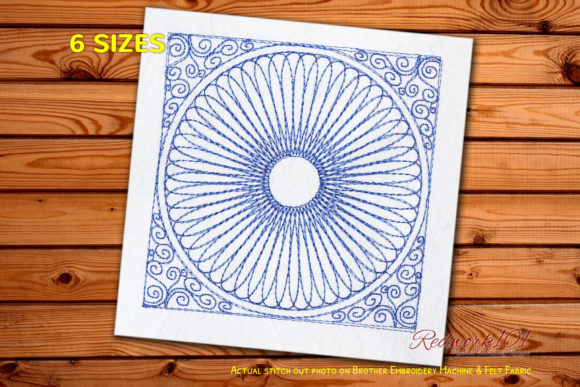
Round Design Redwork Design
A Seasonal Designer’s First Look: Warm, Nostalgic, and Ready for Gifting
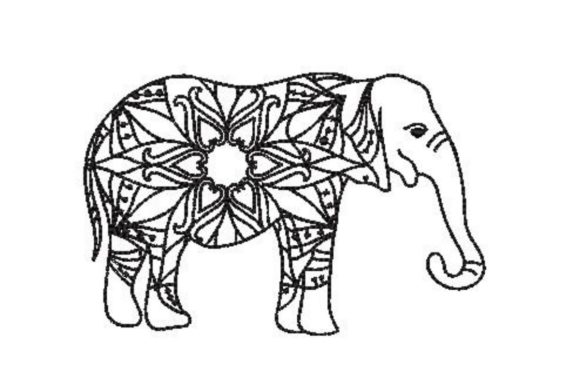
As an embroidery designer who’s built holiday collections for over a decade—think Christmas markets, Easter pop-ups, and back-to-school handmade drops—I opened Round Design Redwork Design expecting charm. What I found was something more: a quiet confidence. It reads as nostalgic yet timeless, cozy but not cluttered, spiritual without being overtly religious. The mandala structure anchors it in tradition, while the redwork technique gives it that hand-stitched warmth customers associate with heirloom-quality handmade gifts. There’s no glitter, no cartoonish flair—just balanced symmetry, clean line work, and breathing room. That makes it exceptionally versatile across seasons: think spring florals on tea towels, autumnal accents on aprons, or winter-ready elegance on pillow covers.
Where It Shines in Real Holiday Product Lines
Round Design Redwork Design thrives where emotional resonance meets practical production. On sweatshirt embroidery, it lands beautifully centered on the chest—neither too dense nor too sparse, holding up even after repeated washing. As a tote bag design, it scales well to 4–5 inches and reads clearly from a distance at craft fairs. For kitchen towel embroidery, its open layout avoids thread buildup in high-friction zones, and the subtle geometry pairs effortlessly with linen, cotton, and waffle weave textures. It’s also a standout for pillow cover placements—centered or corner-anchored—and works especially well when paired with coordinating solid-thread borders or tonal topstitching.
As an embroidered patch, it stitches cleanly with minimal backing show-through, making it ideal for holiday gift bundles (think “Stitch & Sip” kits or family matching sets). On baby items—blankets, bibs, onesies—it reads sweet and serene without overwhelming delicate scale. And because it’s inherently giftable, it elevates personalized gift listings on Etsy: add a monogram in the center or flank it with seasonal phrases (“Joy”, “Peace”, “Home”) for instant product variation. Social media previews? Its circular format translates flawlessly to Instagram carousels and printable mockups—no cropping drama, no awkward margins.
Where to Use It Thoughtfully—Not Everywhere
Not every surface is ideal for Round Design Redwork Design. Avoid using it on tightly curved surfaces like baseball caps unless you’ve tested the hoop size and stabilizer combo thoroughly—distortion risks are higher with symmetrical motifs. On thick terry cloth towels, confirm stitch density isn’t too low; sparse fills can snag or pull. With dark fabric, test thread colors first—redwork traditionally uses high-contrast red-on-cream, but softer tones (burgundy, brick, rust) often read better on charcoal or navy. Metallic thread? Possible—but only if your machine handles fine metallics reliably. Skip it for high-volume holiday runs unless you’ve stress-tested tension and breakage rates.
Also proceed carefully with stretchy garments (knits, ribbed cuffs) unless you’re using cutaway + tear-away hybrid stabilizer and reducing top tension. Tiny lettering isn’t part of this design, so no worries there—but do double-check any optional box stitch element (mentioned in the description): if used, it adds perimeter definition but increases stitch count and density. On small hoop sizes (under 3.5 inches), simplify or omit that outer frame unless your target product truly benefits from the border effect.
Why It Builds Trust—and Sales—During Peak Season
Holiday shoppers don’t just buy products—they buy feeling. Round Design Redwork Design delivers calm intentionality in a noisy season. That translates directly to customer trust: when your Etsy seller listing shows consistent, clean stitching across sweatshirts, totes, and pillows, buyers assume care, consistency, and professionalism. Visually, it strengthens brand consistency—especially if you anchor other seasonal designs around its color palette (cream, deep red, warm taupe, soft sage). Its recognizability helps too: repeat buyers will spot it across your shop, reinforcing your aesthetic signature.
For small shop product creators, this design supports premium pricing—not because it’s complex, but because it feels considered. It reads as “designed for gifting,” which lifts perceived value. And because it’s rooted in redwork (a technique associated with heritage and craftsmanship), it subtly signals authenticity—critical when competing with mass-produced alternatives. In limited-edition apparel drops, it performs well in pre-launch teasers: simple, elegant, and instantly shareable.
Designer Notes You’ll Want Before Stitching
- Always test thread colors on both light and dark fabric swatches—redwork contrast shifts dramatically depending on base tone.
- Check stitch density before bulk production. If the file feels airy, consider adding a single underlay pass for stability on textured fabrics like toweling or burlap-blends.
- Confirm hoop size compatibility with your most-used machines—and note whether the optional box stitch pushes dimensions beyond standard 4x4 or 5x7 limits.
- Use appropriate stabilizer: medium-weight cutaway for stable wovens (towels, pillow covers), lightweight tear-away for knits or baby items.
- Create realistic mockups using actual product photos—not generic templates—to assess visual weight and placement.
- Review small details post-stitch: check for stray jumps, thread nests in tight curves, or fraying on outer edges after trimming.
- Plan matching color palettes across your collection—e.g., pair this design with coordinating embroidery files in olive, cream, and terracotta for cohesive holiday bundles.
- Verify commercial licensing before selling finished seasonal products. Since this is a digital embroidery file, ensure your license permits resale of physical goods—especially for commercial embroidery use on apparel and home goods.
Bottom line? Round Design Redwork Design isn’t just another mandala—it’s a quietly strategic asset for holiday makers. It balances artistry with execution, nostalgia with wearability, and simplicity with distinction. When chosen intentionally—and stitched thoughtfully—it doesn’t just decorate a product. It invites the season in.