Georgia State Embroidery Design Review
First Impressions: A Clean, Confident Map with Holiday Heart
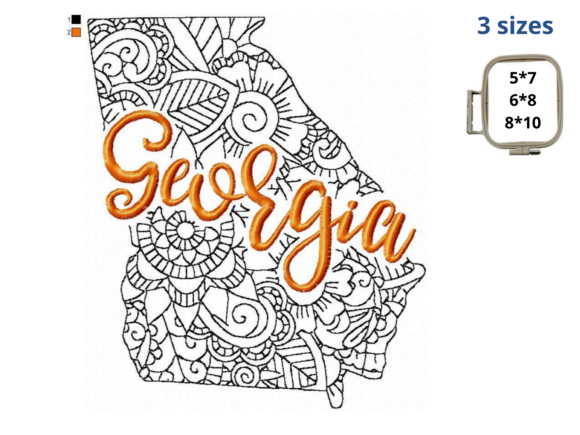
When I opened Georgia State for the first time, I wasn’t looking for fireworks—I was looking for clarity, structure, and quiet intention. What stood out immediately was how well it balances geographic accuracy with embroidery-friendly simplicity. It’s not a cluttered political map; it’s an artwork map—clean lines, thoughtful negative space, and just enough interior detail to read as “Georgia” at a glance, even stitched small. The shape feels grounded, familiar, and proudly regional—not generic or overly stylized. That makes it ideal for Independence Day projects where authenticity matters more than flash.
A Real Project Test: Custom Tote Bags for a Savannah Boutique
Last week, I stitched Georgia State onto a set of natural canvas tote bags for a small Savannah shop launching a summer collection. We used medium-weight tear-away stabilizer, 40-weight cotton thread, and a 5" hoop. On that fabric, the design held its shape beautifully—no puckering, no distortion. The outer border stitched cleanly with consistent satin stitch definition, and the interior state outline remained legible without overloading the fill stitch density. Customers loved how it looked both casual and intentional—like a subtle nod to home, not a loud statement. That’s the sweet spot: Georgia State works best when it supports the product, not overwhelms it.
Where It Shines (and Where It Asks for Care)
Georgia State excels on stable, medium-to-heavy fabrics: sweatshirt fleece, denim jackets, cotton aprons, tea towels, and structured pillow covers. It reads clearly on light and mid-tone backgrounds—especially with contrast thread choices (navy on cream, kraft brown on ivory, or white on navy). As a machine embroidery design, it translates well into embroidered patches and custom cap fronts, provided you adjust stabilizer layers for curvature.
But here’s where attention matters:
- Thin or stretchy fabrics—like baby onesies or lightweight tees—need cut-away stabilizer and possibly reduced stitch density. The outer edge can pull if the base fabric gives too much.
- Dark fabrics demand careful thread selection. Avoid pale pastels unless you’re adding backing or using a shadow layer in your digitizing—otherwise fine interior lines disappear.
- Small hoop sizes (<5") may compress detail near the northern or southern tips. If you’re stitching on kids’ caps or petite apron pockets, preview the layout first.
- Curved surfaces (like baseball caps) benefit from a slightly softened satin stitch edge—check whether the file includes that flexibility, or be ready to tweak tension and underlay.
Design Integrity Meets Handmade Value
What makes Georgia State stand out in a crowded Independence Day marketplace isn’t novelty—it’s reliability. As a craft business owner or Etsy seller, you need designs that reinforce trust: clean edges mean professional finishing; balanced stitch density means fewer re-runs; readable shape means instant recognition. When someone sees this on a handmade kitchen towel or a personalized baby blanket, they don’t think “generic holiday clipart”—they think “thoughtful, local, made with care.” That perception lifts perceived value and supports higher pricing.
It also fits seamlessly into brand storytelling. A Georgia-based coffee roaster? Stitch it subtly on burlap gift sacks. A nursery decor maker? Pair it with soft gray thread on organic cotton swaddle sets. The design doesn’t shout—it invites connection. And that’s what keeps customers coming back for more than one holiday season.
Practical Designer Notes Before You Stitch
Before adding Georgia State to your next batch of custom apparel or digital embroidery file listings, run through these checks:
- Test on scrap fabric first—especially if using textured weaves or blends. Canvas, terry cloth, and fleece all behave differently.
- Review thread color contrast in both daylight and indoor lighting. What reads bold on screen may fade on dark denim.
- Inspect small interior details—like county line hints or directional markers—if those exist in your version. They’re easy to lose on low-density stitching.
- Confirm hoop size compatibility with your machine and project type. Some versions scale well; others lock into fixed dimensions.
- Check stabilizer pairing: tear-away for stable wovens, cut-away for knits, and fusible + tear-away for layered garments like hoodies.
- Use black-and-white mockups to assess visual weight before committing to thread colors or fabric pairings.
- Verify licensing terms before selling finished products or bundling Georgia State into digital design assets—commercial use rights aren’t automatic.
Final Thought: Not Just Another Holiday File
Georgia State is the kind of embroidery file that earns repeat use—not because it’s flashy, but because it’s trustworthy. It performs consistently across tote bag design, sweatshirt embroidery, baby embroidery, and holiday embroidery projects. It respects the craft: no excessive jump stitches, no fragile micro-details, no confusing layering. For small shop owners building a recognizable aesthetic—or for designers curating digital embroidery files for Etsy sellers—it’s a quietly strong asset. It doesn’t try to do everything. It does one thing well: represent place, with pride and precision.