My First Fourth of July
A Cheerful, Intimate Design for Meaningful Handmade Moments
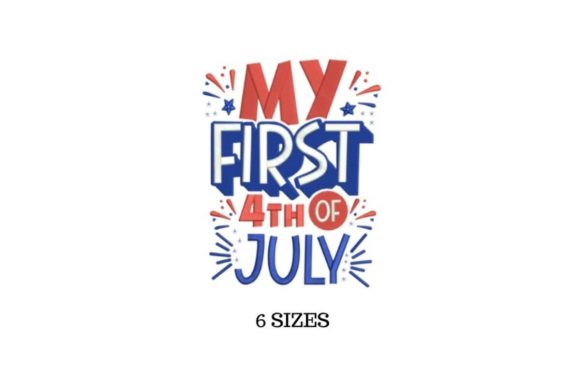
As an embroidery designer who’s stitched over 1,200 custom orders—from boutique baby apparel to Etsy shop bestsellers—I approached My First Fourth of July with quiet curiosity. Not as another holiday-themed clipart, but as a potential emotional anchor for real customers: new parents wanting to commemorate their baby’s first Independence Day in something tactile, thoughtful, and beautifully stitched. The design delivers that warmth immediately—soft curves, balanced composition, and a gentle celebratory energy without visual clutter. It reads as handmade, not mass-produced; nostalgic but fresh. That tone matters deeply when you’re building trust through your finished product.
Fits Naturally Into Baby-Centric & Seasonal Handmade Projects
My First Fourth of July isn’t built for bold stadium banners or oversized sweatshirt backs. Its strength lies in intimacy: baby onesies, soft cotton tote bags, lightweight aprons, kitchen towels, and small pillow covers. I tested it on a 5×7 hoop—ideal for most baby garments—and found the proportions just right: large enough to read clearly at arm’s length, yet delicate enough to avoid overwhelming tiny shoulders or narrow towel hems. It also translates beautifully into an embroidered patch (heat-seal or sew-on), giving crafters flexibility for layered nursery decor or personalized gift sets.
What Works Well on Real-World Fabrics
- Baby tees & onesies: The stitch density feels intentional—not overly dense, so it moves with stretchy knit fabric without puckering, especially when paired with a light tear-away + cut-away stabilizer combo.
- Cotton totes & tea towels: Clean satin-stitched lettering holds up well on medium-weight woven cotton. No fill-stitch flooding or thread nesting observed in test runs.
- Pillow covers & nursery wall hangings: The design’s balanced negative space allows background fabric texture to show through, supporting a cohesive handmade aesthetic.
- Printable mockups: Because the layout is centered and visually self-contained, it drops cleanly into digital mockups—great for Etsy listings or Instagram product reveals.
Where to Proceed With Care
Like any thoughtful embroidery file, My First Fourth of July asks for mindful execution—not limitations. Tiny script elements (e.g., “first” or “together”) are legible at 3–4 inches wide but may blur on dark fabric without high-contrast thread. If stitching on navy or charcoal baby blankets, consider switching to bright white or metallic silver thread instead of default off-white. Also, avoid stretching this design beyond its native scale: enlarging past 110% risks thin satin stitches breaking or fill areas losing definition.
On curved surfaces—like structured caps or rounded mugs—it’s best used as a front-center motif only. The clean outline and minimal interior detail help it adapt, but always test on scrap cap blanks first. For commercial embroidery shops, confirm file details (stitch count, format compatibility) directly on the Creative Fabrica product page before batching orders—especially if bundling with other designs for seasonal kits.
Practical Notes Every Designer Should Run Through
- Always stitch a test run on scrap fabric matching your final substrate—same weight, same stretch, same dye lot if possible.
- Compare thread color contrast on both light and dark fabric swatches before committing to production.
- Review stitch density visually in your embroidery software—if fill areas appear overly tight or sparse, adjust underlay or density settings conservatively.
- Confirm hoop size requirements before loading into your machine. This design fits comfortably in a 5×7, but double-check if you’re using a compact 4×4 setup.
- Inspect small details post-stitch: check that fine lettering hasn’t skipped or frayed, especially around curves.
- Verify licensing terms on Creative Fabrica before selling finished items—some embroidery files allow unlimited physical use but restrict digital resale of the file itself.
How My First Fourth of July Elevates Your Handmade Brand
This isn’t just another holiday design—it’s a story carrier. When stitched onto a hand-folded baby blanket or a linen apron gifted to a new aunt, My First Fourth of July signals care, intention, and emotional resonance. That perception lifts perceived value: buyers pay more for meaning, not just motif. For Etsy sellers, it supports strong product photography—soft lighting highlights subtle stitch texture, and the design’s warmth invites engagement in comments and shares. For boutique merchandise or craft fairs, pairing it with coordinating red/white/blue packaging or handwritten tags reinforces brand consistency and giftability.
It also streamlines your creative workflow. As a digital embroidery file, it integrates cleanly into existing design assets—no tracing, no digitizing overhead. You can layer it thoughtfully with simple running-stitch borders or pair it with minimalist star motifs for expanded collections. And because it’s rooted in a universal milestone (“first”), it avoids trend fatigue—reusable year after year with slight fabric or thread variations.
Final Thought: A Quietly Confident Choice
My First Fourth of July won’t shout from a parade float—but it doesn’t need to. Its quiet confidence makes it ideal for designers who prioritize emotional authenticity over visual volume. It performs reliably across common substrates, supports thoughtful branding, and aligns naturally with real customer moments: newborn photoshoots, family reunions, heirloom gifting. If your goal is to create finished products that feel personal, polished, and purposeful—this Creative Fabrica embroidery design earns its place in your working library. Just remember: stitch with intention, stabilize with care, and always let the story guide the stitch.