Gnome Fisherman Caught a Fish
First Impression: Whimsy with Purpose
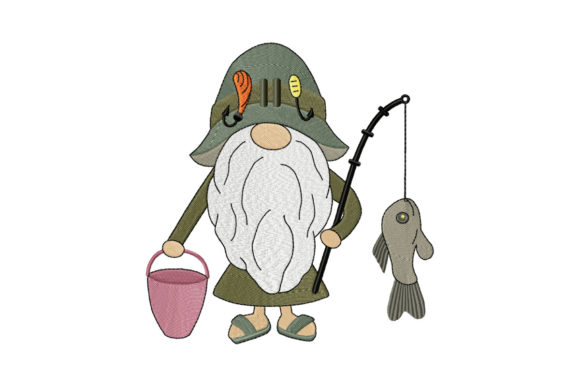
When I opened Gnome Fisherman Caught a Fish, my first thought wasn’t “cute”—it was “telling.” There’s narrative weight in that little gnome, rod bent, fish gleaming mid-air. The pose is balanced, the composition leans slightly right to imply motion, and the scale feels intentional—not too busy for a baby onesie, not too sparse for a tote bag front. It reads as friendly but not childish, nostalgic but not dated. As an embroidery designer who’s stitched hundreds of themed files, I immediately saw its versatility: this isn’t just a novelty—it’s a story you can *place*. On a linen tea towel? Yes. A canvas apron for a fishing lodge gift shop? Absolutely. A custom sweatshirt for a dad-and-me camping trip? That’s where it sings.
A Real-World Test: Stitching It on a Cotton Twill Tote
Last week, I used Gnome Fisherman Caught a Fish for a small-batch order—eight embroidered cotton twill totes for a local outdoor boutique. We chose medium-weight stabilizer (cutaway + tear-away combo), 40-weight polyester thread, and ran it at 75% speed to preserve crispness in the gnome’s hat brim and the fish’s scales. The design held up beautifully: the satin stitch on the fish’s belly stayed smooth, the fill stitch in the gnome’s coat didn’t pucker, and the running stitch outline around his boots added subtle definition without overcrowding. Customers commented on how “alive” it felt—not flat or cartoonish, but warm and hand-crafted. That’s the difference between a decorative file and a finished product that builds trust.
Where It Shines—and Where It Needs Care
Gnome Fisherman Caught a Fish thrives on stable, medium-to-heavy fabrics: denim jackets, canvas bags, terry cloth towels, structured caps, and baby bodysuits made from Pima cotton or interlock knit. Its charm lies in confident lines and moderate detail—not micro-stitching or fine gradients—so it translates cleanly across most embroidery project types.
- Great for: Sweatshirt embroidery, embroidered patch creation, baby embroidery (especially boy-themed nursery decor), holiday embroidery (think Father’s Day or summer solstice gifts), and commercial embroidery for boutique branding.
- Use carefully on: Highly textured fabrics like bouclé or thick fleece (stitch definition blurs), stretchy knits without proper stabilizer (distortion risk), dark fabric with light thread (check contrast on mockups), and curved surfaces like baseball caps—test hoop placement first.
The fish’s tail and the gnome’s fishing pole extend just enough to require attention at the edges. On a small hoop (under 4”), you’ll want to verify whether the full design fits—or if cropping the pole tip is acceptable for your use case. For Etsy sellers listing digital embroidery files, that’s a note worth adding to your description: “Optimized for 5x7” hoops; minor trimming possible for 4x4” with slight visual trade-off.”
Design Integrity in Action
What makes Gnome Fisherman Caught a Fish work commercially isn’t just cuteness—it’s cohesion. The proportions support legibility at multiple sizes. The gnome’s face has gentle expression without tiny eyes or stitched mouths that vanish after washing. The fish has clear silhouette and implied texture—not so much detail that it turns muddy on terry cloth, not so little that it reads as a blob. That balance directly affects perceived value: customers pay more for handmade products that look intentional, not rushed. And because the theme bridges nostalgia and activity—camping, fishing, fatherhood—it fits seamlessly into seasonal collections, craft fair displays, and personalized gift offerings.
Practical Designer Notes Before You Stitch
Before committing to a production run or listing Gnome Fisherman Caught a Fish in your shop:
- Test the embroidery file on scrap fabric matching your final product—same weight, same stretch, same color.
- Check thread color contrast on both light and dark backgrounds using a printable mockup. That fish should pop, not fade.
- Review stitch density—especially in the gnome’s beard and fish’s gills. Overly dense areas can cause stiffness or thread breakage on lightweight baby clothes.
- Confirm hoop size compatibility. If selling digitally, state minimum recommended hoop size clearly—no guesswork for your buyers.
- Inspect small details at 200% zoom: are there stray jump stitches? Is the fish’s eye fully formed, or does it rely on implied shape?
- Run a black-and-white version. If it still reads clearly, you’ve got strong design assets.
- Verify licensing terms. Can you sell finished embroidered items commercially? Can you bundle it in a craft bundle? Don’t assume—check before scaling.
Beyond the Stitch: Why This Design Builds Your Brand
As a craft business owner or Etsy seller, every design you choose reflects your taste, your standards, and your understanding of what resonates. Gnome Fisherman Caught a Fish signals playfulness grounded in craftsmanship—not gimmicky, not generic. When a customer sees it on a custom-embroidered apron at a farmers’ market, they don’t just see a gnome—they see care, continuity, and quiet storytelling. That’s what converts browsers into repeat buyers. It also photographs well: clean lines, balanced negative space, and a mood that reads instantly in social media thumbnails. Whether you’re building a line of camping-themed embroidery project kits or curating baby embroidery for gender-neutral nurseries, this design holds its own without shouting.
Final Thought: A Design That Earns Its Place
Gnome Fisherman Caught a Fish isn’t just another machine embroidery design—it’s a reliable, expressive tool. It works because it respects the medium: no impossible angles, no fragile details, no over-engineered fills. It invites personalization (swap thread colors for seasons, add a name below the pole) while keeping its core identity intact. For designers, makers, and small shop owners, that’s gold: a digital embroidery file that stitches cleanly, sells consistently, and makes your finished product feel thoughtfully made—not just machine-made.