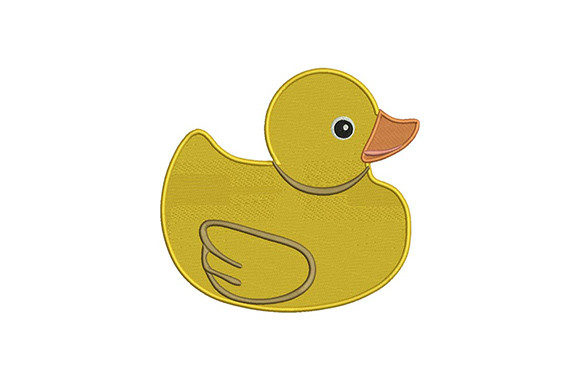
Rubber Duck Embroidery Design Review
Why This Design Fits Real Small-Business Needs
As an embroidery seller who’s launched over 200 Etsy listings—and shipped thousands of embroidered towels, totes, and baby blankets—I approach every Creative Fabrica embroidery download with two questions: “Will this stitch cleanly on mid-weight cotton?” and “Will a customer pause mid-scroll to click ‘Add to Cart’?” Rubber Duck passes both. It’s not just another duck—it’s a mood, a moment, a tiny burst of joy that lands perfectly for bath-time gifting, nursery decor, or playful custom apparel.
A Playful, Timeless Vibe—Not Just for Bath Towels
The description says “It’s bath time, get your duckie”—and yes, it absolutely shines on kid’s bath towels. But don’t stop there. Rubber Duck reads as playful, friendly, and softly nostalgic, not cartoonish or overly cutesy. That balance makes it versatile across categories: think embroidered patches for denim jackets, minimalist sweatshirt chest logos, or sweet accents on organic cotton baby blankets. It avoids seasonal fatigue (no pumpkins, no snowflakes), so it works year-round—not just during baby showers or spring launches.
Where Rubber Duck Adds Real Value to Your Product Line
- Etsy listings: Pair Rubber Duck with clean, lifestyle-focused photography—think a folded kitchen towel draped over a wooden counter, or a baby blanket laid across a wicker bassinet. The design’s simplicity means it photographs well even at thumbnail size, helping your listing stand out in crowded search results like “baby embroidery” or “kitchen towel embroidery.”
- Craft fair items: Stitch Rubber Duck onto linen aprons or canvas tote bags—small-batch, hand-finished pieces that feel intentional and giftable. Customers love recognizing the charm without needing explanation.
- Personalized gifts: Combine Rubber Duck with monogrammed initials or a child’s name in a coordinating script font. It elevates a basic item (like a cotton onesie or muslin drawstring bag) into a keepsake-quality personalized gift.
- Boutique merchandise: Use it as a subtle logo alternative—embroidered on the hem of a robe, corner of a pillow cover, or back yoke of a kids’ sweatshirt. It feels boutique-ready, not mass-produced.
- Printable mockups & social previews: Because Rubber Duck is compact and high-contrast, it converts beautifully into digital mockups. You can generate consistent Instagram story frames, Pinterest pins, or Etsy banner images without redesigning each time.
What Makes Rubber Duck Commercially Smart
This isn’t just about cuteness—it’s about buyer psychology. A smiling rubber duck triggers warmth and familiarity. Parents smile. Grandparents remember bath time with their own kids. Teachers buy it for classroom reward systems. That emotional resonance translates directly into higher perceived value: customers pay more for products that feel thoughtful, memorable, and professionally finished. And because Rubber Duck is small-scale and low-detail, it stitches quickly—keeping your production time efficient and stabilizer waste low.
Practical Seller Notes Before You List
Before adding Rubber Duck to your next batch of handmade product listings, do these five things:
- Test the stitch-out first. Run a sample on the exact fabric you plan to sell—towel terry behaves differently than quilting cotton or fleece. Note how the design handles underlay, pull compensation, and jump stitches.
- Photograph on real fabric—not just screen mockups. Natural light, neutral background, and a tactile close-up (show thread sheen and fabric texture) build trust far better than flat digital renders.
- Compare thread color options. Try classic yellow, but also soft sage, dusty blue, or warm oat—especially if you’re stitching on cream or charcoal fabrics. A single design becomes three distinct product variations.
- Check readability at thumbnail size. Zoom out to 25% in your image editor. Does the duck’s beak, eye, and curve still read clearly? If it blurs into a blob, consider pairing it with a simple border or text element for visual weight.
- Confirm hoop size and stitch density. The description mentions “multi,” but doesn’t specify formats or sizes. Visit the Creative Fabrica product page to verify compatible file types (PES, DST, JEF, etc.), recommended hoop dimensions, and whether the design includes multiple sizes. Also double-check the commercial embroidery license—some Creative Fabrica embroidery files allow unlimited finished product sales; others restrict quantity or require attribution.
Design Personality: Friendly, Not Fussy
Rubber Duck sits comfortably between modern minimalism and classic charm. It’s not ultra-thin line art (so it won’t vanish on textured fabric), nor is it densely filled (so it won’t pucker on lightweight knits). That middle-ground clarity makes it ideal for beginner-to-intermediate embroiderers—and reliable for repeat production. It’s feminine enough for baby collections, gender-neutral enough for unisex apparel, and bold enough to hold its own on structured items like caps or patch-backed denim.
Final Thought: A Low-Risk, High-Return Addition
If you’re curating a small collection of machine embroidery designs for your craft business, Rubber Duck is low-lift and high-reward. It complements existing themes (nursery, bath, baby, kitchen, playroom) without overlapping too closely with overused motifs like stars, clouds, or woodland animals. It supports quick-turn projects—like embroidered patches you can iron-on or sew-by-hand for last-minute craft fair prep—and scales easily from one-off personalized gifts to small-batch custom apparel. Most importantly, it feels human: warm, familiar, and quietly joyful. In a market flooded with generic clipart-style embroidery files, Rubber Duck stands out by being both simple and sincere.