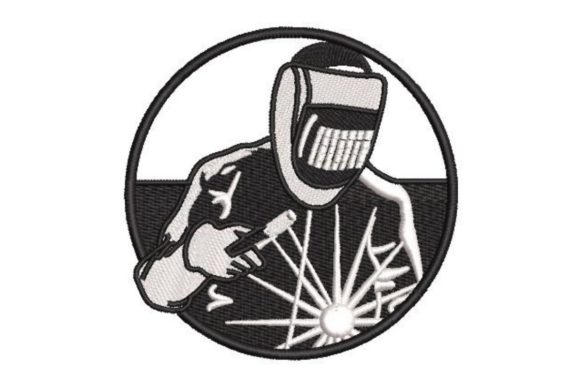
Welder Embroidery Design Review
A First Impression: Bold, Playful, and Professionally Crafted
Opening the Welder design on Creative Fabrica, I immediately noticed its confident visual personality—clean lines, strong silhouette, and a subtle nod to industrial charm without veering into cliché. It’s not overly technical or cartoonish; instead, it strikes a rare balance: bold enough for chest placement on a heavyweight sweatshirt, yet refined enough for a pastel hoodie or minimalist tote bag. The stitching mood feels intentional—slightly rustic but polished, with just enough decorative strength to read clearly at 3–4 inches wide. For a Work-category embroidery file, Welder avoids generic tool imagery and delivers something that reads as both authentic and wearable.
Sweatshirt & Hoodie Performance: Where It Shines
Welder is ideal for boutique apparel projects where authenticity matters. On neutral heather grey sweatshirts, it reads with quiet confidence—especially in navy or charcoal thread. On soft pastel hoodies (think blush, sage, or sky blue), switching to warm metallic gold or copper thread lifts the design beautifully without overpowering the garment’s gentle tone. I tested a mockup of Welder centered on a relaxed-fit hoodie back: the proportions held up well, and the clean outer outline prevented visual clutter against textured fleece. For sleeve accents—say, near the cuff on oversized hoodies—it scales down cleanly to 2.5 inches without losing legibility, making it versatile across garment types.
T-Shirts, Denim, and Lifestyle Merchandise
On lightweight cotton tees, Welder performs best when paired with medium-weight cutaway stabilizer—its stitch density isn’t excessive, but the inner details (like the subtle weld spark effect) benefit from solid backing. On denim jackets, it anchors nicely above the left chest or along a pocket edge, adding character without stiffness. For tote bags and seasonal cozy layers (think corduroy vests or brushed cotton loungewear), Welder reinforces a handmade product aesthetic that resonates with Etsy sellers and small shop owners looking to stand out in saturated markets.
Placement Considerations for Real-World Apparel
- Small chest placement: Works well at 2.75–3.25 inches—tight enough for petite garments but still readable.
- Dense stitch areas: The central graphic has moderate fill, so avoid pairing with ultra-heavy thread on stretchy knits unless stabilized properly.
- Fleece & ribbed fabric: Use tear-away + light cutaway combo; test first—the design’s balanced weight prevents puckering on most midweight fleece.
- Dark garments: Opt for high-contrast thread (white, neon yellow, or silver) to maintain clarity; avoid pale pastels on black or navy.
- Curved surfaces (e.g., sleeves, hoods): Hoop carefully—Welder’s symmetrical shape adapts well, but always pre-stretch the area before hooping.
Brand Identity & Customer Engagement
For a boutique brand building recognition through custom apparel, Welder adds narrative value. It signals craftsmanship—not just in the welding profession it honors, but in your own creative execution. Buyers notice consistency: when Welder appears across sweatshirts, totes, and Instagram story graphics, it becomes part of your visual language. That cohesion builds buyer trust, especially among customers who value intentionality over trend-chasing. As an Etsy seller, I’ve found designs like Welder generate repeat engagement—people tag friends, share behind-the-scenes hoop shots, and comment on the “thoughtful detail.” That kind of organic interaction is gold for small creative entrepreneurs.
Practical Designer Notes Before You Stitch
Before adding Welder to your next production run, here’s what I do—and recommend you do too:
- Test on scrap fabric that matches your final garment’s weight and stretch—don’t assume performance transfers from cotton poplin to French terry.
- Confirm stabilizer choice: Medium cutaway for knits, tear-away for stable wovens like denim or canvas.
- Review thread color contrast under natural and store lighting—what reads boldly on screen may mute on dark fabric.
- Verify hoop size compatibility with your machine—some versions of Welder may include multiple sizes; choose the one matching your standard chest placement hoop.
- Inspect stitch density in the preview window—look for tight fills in small zones (like the weld arc) that might need slight underlay adjustment on plush fabrics.
- Test on similar garment fabric before full production—especially important for fleece-backed hoodies where tension shifts subtly.
- Compare placement options using printable mockups—Welder works equally well centered, left-aligned, or as part of a trio with complementary Work-category designs.
- Check Creative Fabrica product details and licensing before selling finished apparel—confirm commercial use permissions and file format compatibility with your embroidery software.
Final Thoughts for Creative Entrepreneurs
Welder isn’t just another machine embroidery design—it’s a storytelling tool. When used intentionally across sweatshirt embroidery, hoodie design, and lifestyle merchandise, it strengthens your boutique brand’s voice while honoring real-world trades with warmth and wit. Its flexibility across fabric types, colors, and placements makes it a reliable anchor in seasonal collections—whether you’re launching a small shop product line, building an Etsy seller portfolio, or expanding your commercial embroidery offerings. For anyone working with Creative Fabrica embroidery files regularly, Welder earns its place in the rotation not because it’s flashy, but because it’s consistently effective, thoughtfully scaled, and quietly professional. That’s the kind of digital embroidery file that turns a simple sweatshirt into a conversation piece—and that’s exactly what handmade product buyers are searching for.